















The assembly of rotors and stators is a crucial component of the motor manufacturing process. Many factories utilize specialized automated production lines, which may involve a larger initial investment, but guarantee higher output and quality. So, how can rotor and stator assembly lines balance cost and efficiency? How can they enhance brand competitiveness? Vacuz will briefly explain below!

I. Core Strategies for Balancing Cost and Efficiency
1. Parallel Design and Modular Layout
Process Breakdown and Parallel Operation: Sequential processes are broken down into parallel workstations, seamlessly connected via automated guided vehicles (AGVs) or high-efficiency conveyors, reducing workpiece waiting time. For example, a 6-station rotary table can simultaneously perform core insertion, winding, and welding processes, reducing the cycle time per piece by 38%.
U-Shaped Production Line Layout: This shortens material handling distances, reduces operator movement, and improves production line efficiency. Combined with modular design, the production line configuration can be quickly adjusted according to product requirements, adapting to multi-variety production.
2. High-Speed Equipment and High-Precision Control
High-Speed Winding Machine: Utilizing winding machines with speeds exceeding 5000 rpm, coupled with a high-precision servo drive system, ensuring winding accuracy of ±0.01mm, improving production speed and product quality.
Multi-Station Composite Equipment: Introducing composite machines integrating winding, embedding, and pressing functions, reducing workpiece turnover and shortening production cycles.
3. Intelligent and Automated Upgrades
Machine Vision and Torque Control: Employing 3D vision cameras for stator slot identification with a positioning accuracy of ±0.02mm; utilizing high-precision torque sensors to monitor embedding torque in real time, controlling fluctuations within 5%, improving product reliability.
Online Inspection and AI Defect Recognition: Equipped with inductance testers, insulation resistance testers, and other equipment to achieve 100% process inspection; utilizing deep learning algorithms to build an intelligent defect recognition system to automatically identify defects such as enameled wire breakage and embedding misalignment, with a detection efficiency ≥99.5%.
4. Flexible Production and Rapid Changeover
Modular Tooling and Fixtures: Utilizing a quick-change chuck design, it supports rapid changeover within 10 minutes, adapting to the needs of multi-variety production.
Parameterized Programming: Process parameters for different product models can be directly accessed through the HMI, reducing equipment adjustment time and shortening changeover time to within 30 minutes.
5. Cost Optimization and Resource Utilization
Energy Saving Retrofit: Adopting IE4/IE5 motors and frequency converters saves 15%-20% on electricity; compressed air leakage rate is reduced from 25% to 5%, lowering energy costs.
Surplus Material Recycling and Centralized Procurement: Recycling and reusing short wire ends reduces waste; long-term agreements reduce raw material costs by 8%-12%; VMI model improves inventory turnover by 30%.
II. Key Paths to Enhancing Brand Competitiveness
1. Technological Leadership and Innovation-Driven Development
2. Quality Assurance and Brand Reputation
3. Intelligent Management and Data-Driven Development
4. Customer Orientation and Rapid Response
5. Green Manufacturing and Social Responsibility
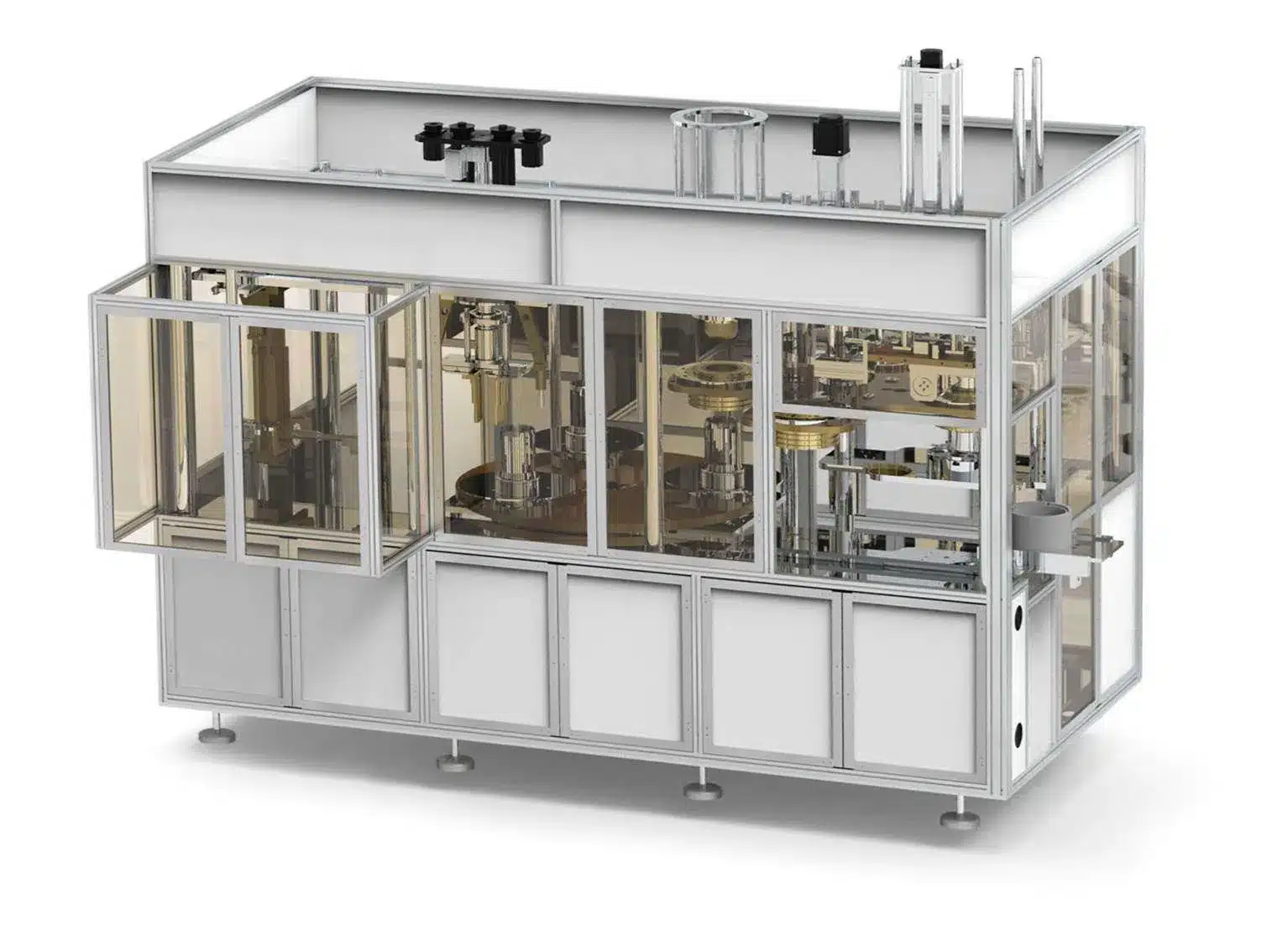
How can rotor and stator assembly lines balance cost and efficiency? How to enhance brand competitiveness? The above provides a simple explanation of Vacuz, and I hope this information will be helpful!
 English
  Spanish
  Portuguese
  Italian
  German
  French
  Russian
  Turkish
  Polish
  Ukrainian
  Japanese
  Korean
  Chinese (Taiwan)
  Chinese (China)