















Automated stator and rotor production lines form a highly efficient production system through process integration, equipment collaboration, technology integration, and layout optimization. A reasonable combination requires synergistic optimization across five dimensions: automation level, equipment selection, flexible production, quality control, and data interoperability. Below, Vacuz will give you a brief introduction!

I. The Relationship Between Automated Stator and Rotor Production Lines
1. Process Integration: Stator and rotor production is typically a core part of motor manufacturing, and the two are closely integrated in the production process. Stator production may include processes such as winding, insulation treatment, and winding, while rotor production may involve steps such as core stacking, magnet bonding, and balancing. Automated production lines, through accurate process arrangement and material flow, ensure that the stator and rotor can efficiently and accurately complete their respective production tasks and ultimately be assembled.
2. Equipment Collaboration: Automated stator and rotor production lines may share some equipment or processes, such as automated loading and unloading systems and material handling robots. These devices work collaboratively between the two production lines to achieve rapid and accurate material transfer, improving production efficiency.
3. Technology Integration: With the development of intelligent manufacturing technology, automated production lines for stators and rotors increasingly emphasize technology integration. For example, by introducing machine vision systems, torque control technology, and online detection systems, automated monitoring and fault early warning of the production process are achieved, improving product quality and production stability.
4. Layout Optimization: In terms of factory layout, automated production lines for stators and rotors are typically planned in adjacent or nearby areas to reduce material handling distances and time. Simultaneously, by adopting U-shaped production line layouts and parallel design concepts, production cycles are further shortened, and production efficiency is improved.
II. Recommendations for Reasonable Matching
1. Automation Level Matching: Select an appropriate level of automation based on production needs and product characteristics. For high-precision, high-efficiency production needs, fully automated production lines can be used; for multi-variety, small-batch production needs, semi-automated or flexible production lines can be used. Ensure that the automated production lines for stators and rotors are matched in terms of automation level to avoid production bottlenecks.
2. Equipment Selection and Configuration: Select appropriate equipment types and configurations based on the production characteristics of stators and rotors. For example, for the stator winding process, a high-speed winding machine paired with a high-precision servo drive system can be selected; for the rotor balancing and correction process, a high-precision dynamic balancing tester can be chosen. Simultaneously, ensure smooth connections between equipment to reduce material handling and waiting time.
3. Flexible Production and Rapid Changeover: With constantly changing market demands, the variety of motor products is also increasing. Therefore, the automated production lines for stators and rotors need to have flexible production capabilities, able to quickly adapt to the production needs of different products. By adopting modular design, parametric programming, and other technologies, rapid changeover and adjustment of the production line can be achieved.
4. Quality Control and Traceability: Establish a comprehensive quality control system to fully monitor and inspect the stator and rotor production process. By introducing online inspection systems, AI defect recognition, and other technologies, quality problems in the production process can be identified and corrected in a timely manner. At the same time, establish a product gene map and quality traceability system to achieve full traceability and quality control from raw materials to finished products.
5. Data Interoperability and Intelligent Management: By introducing industrial internet, big data, and other technologies, data interoperability and intelligent management between the automated stator and rotor production lines can be achieved. By collecting and analyzing production data in real time, production processes and parameters can be optimized; digital twin models can be built for virtual debugging and process verification; and predictive maintenance technology can be used to proactively identify and resolve equipment failures.
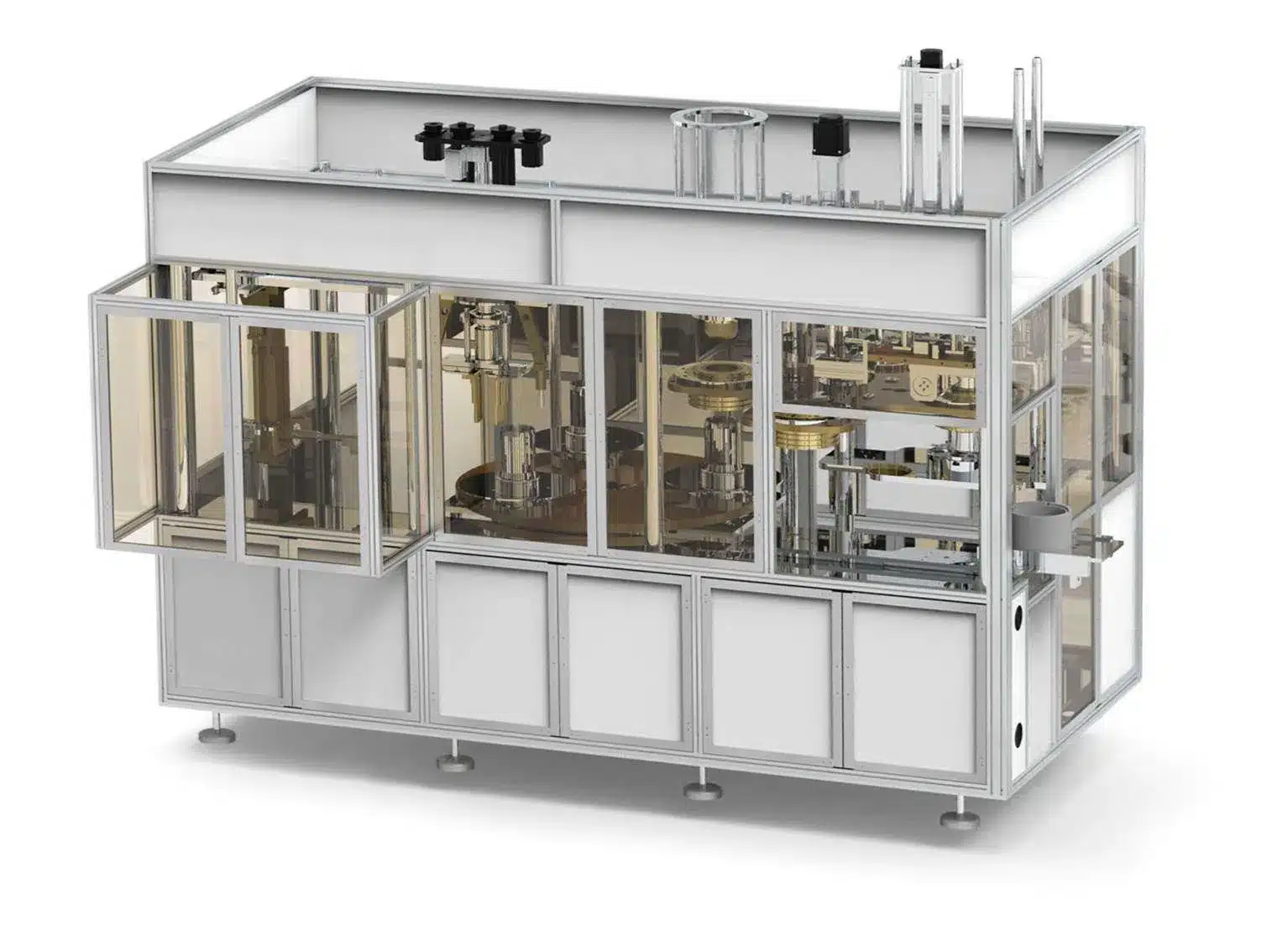
What is the relationship between stator and rotor automated production lines? How can they be properly matched? Vacuz has provided a simple explanation above, and we hope this information will be helpful!
 English
  Spanish
  Portuguese
  Italian
  German
  French
  Russian
  Turkish
  Polish
  Ukrainian
  Japanese
  Korean
  Chinese (Taiwan)
  Chinese (China)