


















Le macchine di avvolgimento esterno a forcella completamente automatiche sono apparecchiature di avvolgimento molto diffuse, spesso utilizzate per gli statori brushless. Offrono un'elevata velocità di avvolgimento, un avvolgimento stretto e una qualità di avvolgimento costante. Quali sono la configurazione e i requisiti di una macchina per l'avvolgimento esterno completamente automatica di statori a forcella? Cosa bisogna considerare quando se ne sceglie una? Vacuz vi fornirà di seguito una breve introduzione!
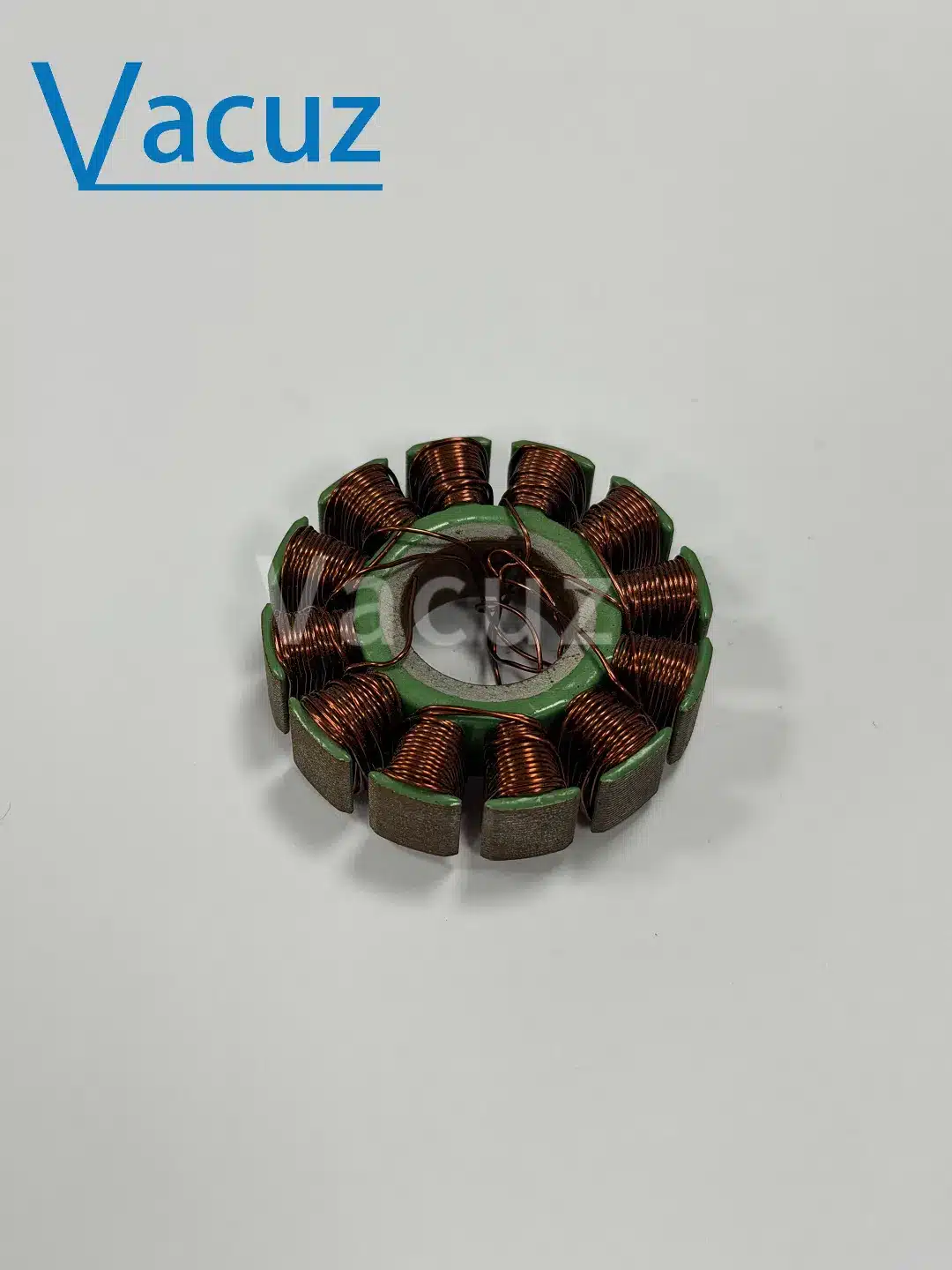
I. Requisiti della configurazione di base
1. Struttura meccanica e sistema di trasmissione
Struttura a forcella: Adotta un design a forcella singola o doppia. La forcella deve essere dotata di punte di filo ceramico (resistenti all'usura e con una conduttività stabile) e il suo movimento in avanti e indietro è ottenuto tramite molle, che lavorano insieme alla piastra di protezione per completare l'avvolgimento della bobina.
Sistema di servocontrollo: Una catena di trasmissione composta da guide di precisione, viti a ricircolo di sfere, giunti e cilindri garantisce un errore di posizionamento della forcella volare ≤±0,1 mm. Un servomotore aziona la rotazione della forcella volante, mentre il sistema di indicizzazione controlla il tempo di commutazione dello slot dello statore a ≤0,1 secondi.
Design multistazione: Supporta il funzionamento sincrono a 1/2/4 stazioni. Il tempo di avvolgimento per una singola stazione può essere ridotto a 8 secondi, con una produzione giornaliera di 2000 unità. Ad esempio, l'avvolgitore esterno Vacuz utilizza dispositivi modulari, che richiedono solo 10 minuti per il cambio.
2. Sistemi elettrici e di controllo
Sistema di controllo principale PLC: Integra la memorizzazione dei parametri, consentendo di preimpostare parametri quali il numero di giri, la direzione e l'angolo di taglio del filo, e supporta la commutazione con un solo clic. Ad esempio, l'avvolgitore esterno Vacuz ha una capacità di memoria per la sequenza di passi di 999 set, adattandosi a processi di avvolgimento complessi.
Sistema di controllo della tensione: Compensa dinamicamente le fluttuazioni di tensione del filo, con un intervallo di tensione di 0,5-1,5N per il filo sottile (≤0,1 mm) e di 2-5N per il filo spesso (≥0,3 mm), eliminando le differenze di tensione insieme a un freno a isteresi.
Interfaccia uomo-macchina (HMI): Visualizza le curve di tensione, gli allarmi di guasto e i dati di produzione in tempo reale, supportando la tracciabilità dei dati e il debug remoto.
3. Funzioni di automazione
Automazione completa del processo: Integra funzioni automatiche di alimentazione, avvolgimento, disposizione del filo, taglio del filo, serraggio e scarico, riducendo l'intervento manuale di oltre 60%. Ad esempio, l'apparecchiatura Vacuz richiede solo la movimentazione manuale del materiale, rendendo il funzionamento semplice.
Capacità di personalizzazione non standard: Per gli statori con grandi diametri esterni, diametri dei fili spessi e alti spessori di pila (ad esempio, diametro esterno dello statore ≤ Φ140 mm, spessore della pila 0-40 mm), sono disponibili stampi e soluzioni di instradamento dei fili personalizzati.
II. Punti chiave della selezione
1. Corrispondenza dei parametri di prestazione
Velocità e precisione di avvolgimento: selezionare la gamma di velocità (ad esempio, 0-4500 giri/min) e la ripetibilità (±0,02 mm) in base ai requisiti del prodotto. I modelli ad alta velocità (ad esempio, le macchine Vacuum) sono adatti per l'avvolgimento di fili sottili, mentre i modelli stabili a bassa velocità (macchine Vacuz) sono adatti per fili spessi o strutture complesse.
Compatibilità del diametro del filo: Confermare il diametro del filo supportato dall'apparecchiatura (ad esempio, Φ0,08-1,2 mm) per evitare rotture o danni dovuti a un utilizzo fuori gamma.
Compatibilità delle dimensioni dello statore: Verificare la copertura del diametro esterno dello statore, del diametro interno e dello spessore della pila (ad esempio, diametro esterno ≤ Φ140 mm, spessore della pila 0-40 mm) per garantire la corrispondenza con le specifiche del prodotto.
2. Stabilità e affidabilità
Qualità dei componenti principali: Privilegiare le apparecchiature che utilizzano servomotori importati, viti a sfera di alta precisione e guide di scorrimento resistenti all'usura per ridurre i tassi di guasto. Le macchine per l'avvolgimento Vacuz utilizzano viti a ricircolo di sfere di precisione per garantire un'elevata stabilità operativa.
Progettazione della dissipazione del calore e della protezione: Per il funzionamento prolungato ad alta velocità sono necessari sistemi di raffreddamento ad alta efficienza per evitare il surriscaldamento del motore; i gradi di protezione devono raggiungere il grado IP54 o superiore per evitare l'intrusione di polvere.
3. Usabilità e manutenibilità
Interfaccia facile da usare: L'interfaccia HMI deve essere semplice e intuitiva, in grado di supportare la commutazione multilingue e la regolazione rapida dei parametri. Ad esempio, le apparecchiature Vacuz offrono interfacce in cinese/inglese, abbassando la soglia operativa.
Comodità di manutenzione: Il design modulare facilita la sostituzione rapida delle parti soggette a usura (come ugelli e tenditori), riducendo i tempi di fermo. Le macchine per l'avvolgimento Vacuz utilizzano forcelle a sgancio rapido, migliorando l'efficienza della manutenzione di 30%.
4. Servizio post-vendita e assistenza tecnica
Velocità di risposta: selezionare i produttori che offrono assistenza online 24 ore su 24 e assistenza in loco entro 48 ore per garantire una risoluzione tempestiva dei problemi.
Fornitura di parti di ricambio: Confermare la capacità del produttore di fornire parti di ricambio fondamentali (come servomotori e moduli PLC) a lungo termine per evitare difficoltà di manutenzione dovute a interruzioni della produzione.
Servizi di formazione: Richiedere al produttore di fornire una formazione sul funzionamento e una guida all'ottimizzazione dei processi per migliorare l'efficienza della produzione. Vacuz fornisce una formazione sistematica agli operatori prima della consegna delle apparecchiature per garantire la continuità della produzione.
5. Costo-efficacia e reputazione del marchio
Confronto dei prezzi: Con la premessa di funzioni identiche, privilegiare le apparecchiature con prezzi ragionevoli e un elevato rapporto costo-efficacia. Le macchine per l'avvolgimento Vacuz sono 5%-10% più economiche rispetto alla media del mercato, adatte a clienti sensibili ai costi.
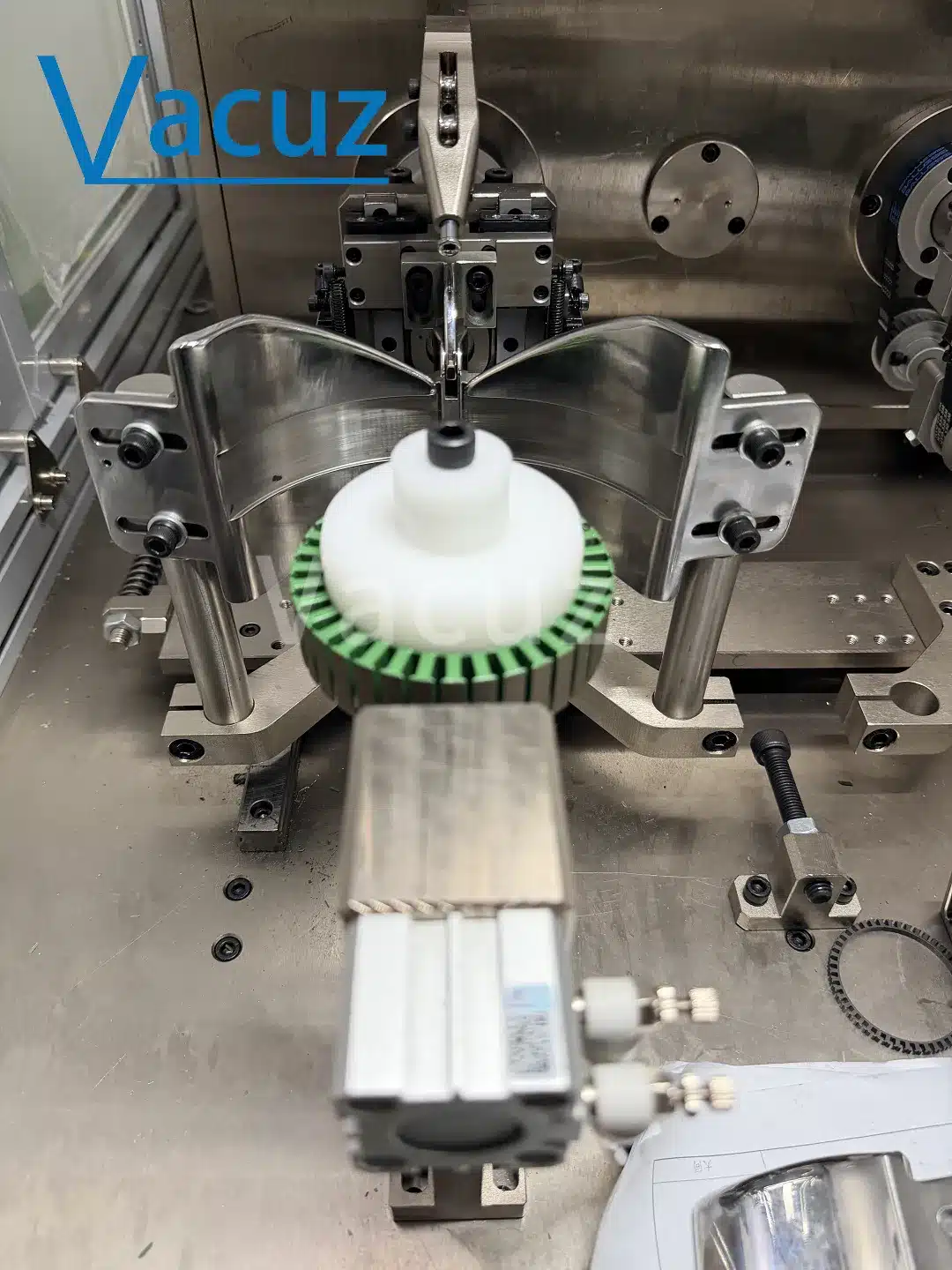
Quali sono la configurazione e i requisiti di una macchina avvolgitrice esterna a forcella volante completamente automatica? Che cosa si deve considerare quando si sceglie una macchina? Vacuz ha fornito una breve spiegazione qui sopra; speriamo che queste informazioni siano utili!