















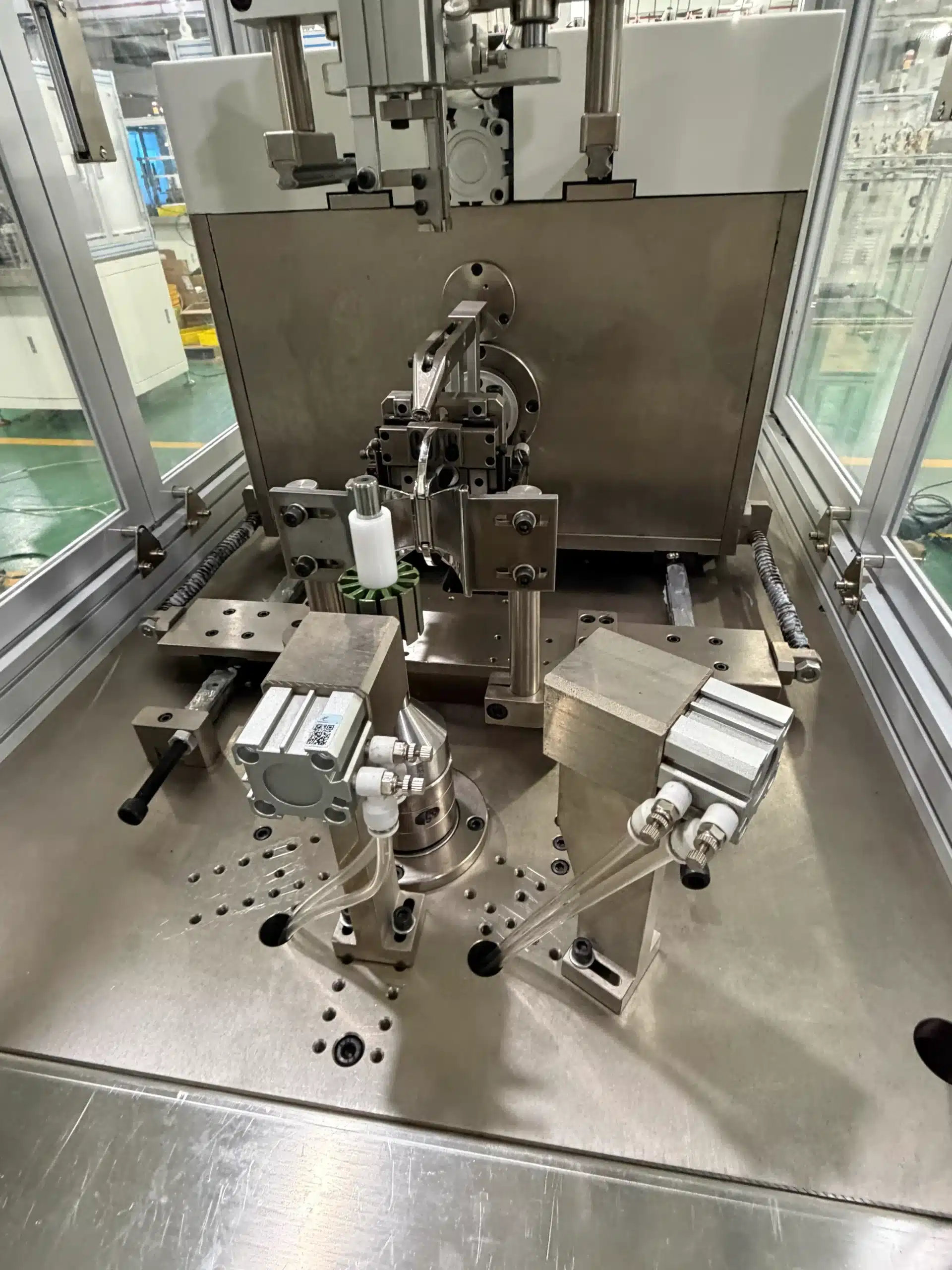
Matching and controlling the winding speed of a motor stator winding machine to production capacity requires comprehensive consideration of equipment performance, process requirements, wire characteristics, and production stability. Efficient production can be achieved through scientific calculations, parameter optimization, and dynamic adjustments. Below are specific methods, which Vacuz will briefly introduce!

I. Matching Methods for Winding Speed and Production Capacity
1. Linear Relationship between Speed and Production Capacity
Winding speed (revolutions per minute, RPM) is directly proportional to production capacity, but must meet process constraints. For example, a 10% increase in speed theoretically increases production capacity by 10% (assuming other conditions remain unchanged). Actual production capacity needs to consider non-linear factors such as equipment acceleration/deceleration time and wire tension fluctuations.
2. Equipment Capacity Assessment
Upper Limit Speed: Determine the theoretical upper limit speed (e.g., 2000 RPM) based on equipment specifications (e.g., servo motor power, transmission system rigidity).
Effective Speed: Adjust the actual speed based on process requirements (e.g., wire diameter, slot fill factor).
3. Bottleneck Process Identification
If the winding speed has reached the equipment’s upper limit, but production is still insufficient, it’s necessary to check whether other processes (such as material change, inspection, and handling) are becoming bottlenecks.
II. Reasonable Control Strategies for Winding Speed
1. Segmented Speed Control
Start-up Stage:
Use soft start (acceleration ≤ 5m/s²) to avoid wire breakage due to inertial vibration.
Stabilization Stage:
Dynamically adjust the rotation speed based on wire tension feedback to ensure tension fluctuation ≤ ±5%.
Deceleration Stage:
Use gentle deceleration (deceleration ≤ 3m/s²) to prevent wire slack or tangling.
2. Process Parameter Linkage Optimization
Tension and Speed Matching:
Tension increases with speed and needs real-time compensation via a servo tensioner.
Wire Spacing and Speed Coordination:
During high-speed winding, the wire spacing needs to be appropriately increased (e.g., by 0.02mm) to prevent wire deviation due to centrifugal force.
3. Dynamic Adjustment Strategy
Automatic Speed Control Based on Output:
Real-time monitoring of output via PLC or industrial computer. If the target output is not reached, the speed is automatically increased (≤5% adjustment each time).
Quality-Based Feedback Control:
Deploying a machine vision system to detect wire arrangement. If a risk of wire damage (such as wire crossing or slack) is detected, the speed is immediately reduced and an alarm is triggered.
4. Environmental and Maintenance Assurance
Temperature Control:
During continuous operation of the winding machine, the motor temperature may rise, leading to performance degradation. The temperature must be maintained ≤60℃ using a cooling fan or water cooling system.
Regular Maintenance:
Clean the guide rollers and tension sensor weekly; lubricate the lead screw and guide rails monthly to reduce the impact of friction on speed.
III. Summary
Core Principle: The winding speed must be balanced between equipment capacity, process requirements, and wire characteristics to avoid blindly increasing speed, which could lead to quality degradation.
Implementation Steps:
Calculate theoretical output and identify bottleneck processes;
Control speed in segments and optimize tension and wire arrangement parameters in a coordinated manner;
Achieve stable production through dynamic adjustment and environmental assurance.
Long-term recommendation: Establish a process database to record optimal speed parameters for different stator specifications and wire types, supporting rapid changeovers and continuous optimization.
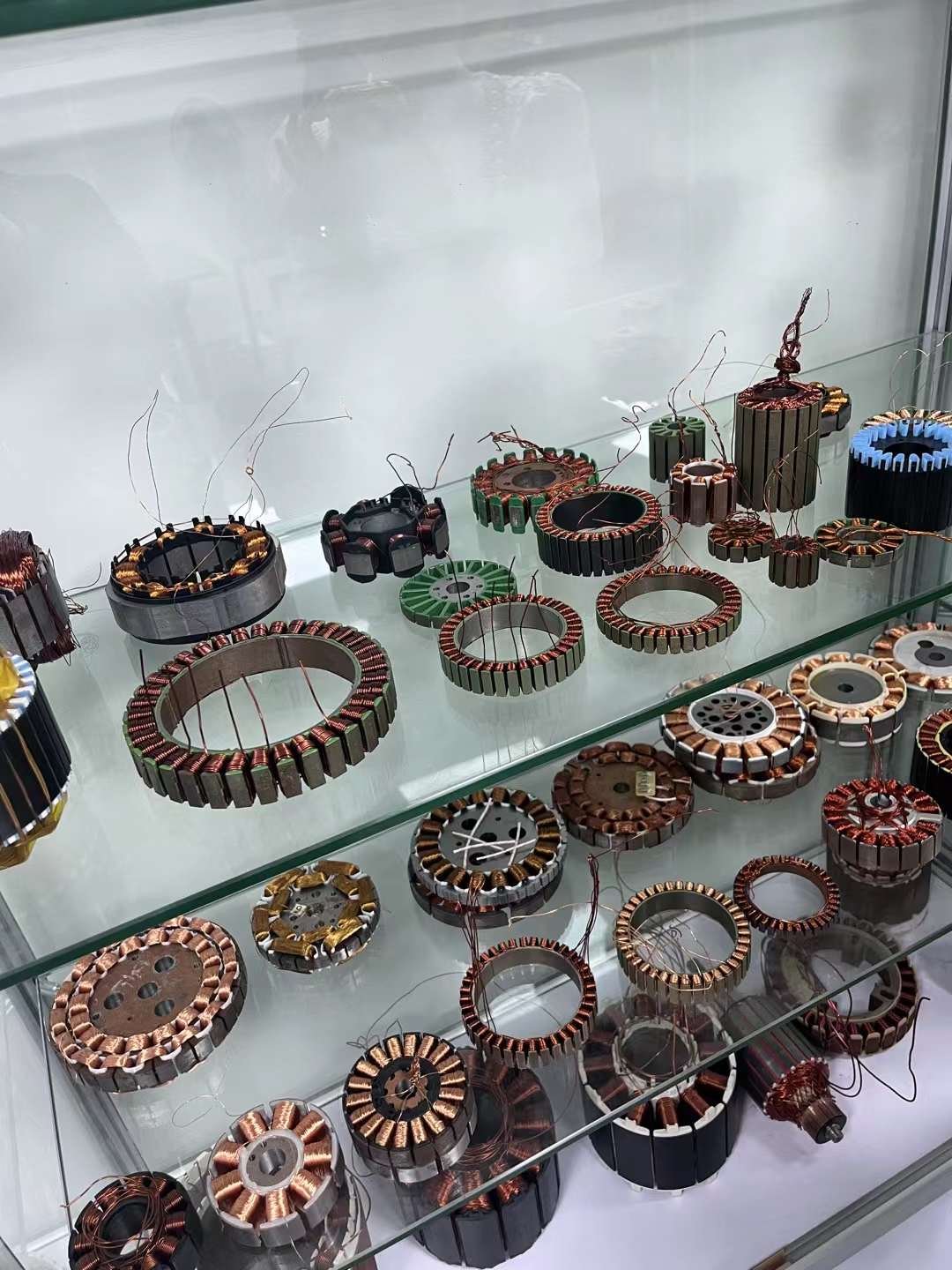
How to match the winding speed of a motor stator winding machine to production requirements? How to reasonably control the speed? Vacuz has provided a simple explanation above, and we hope this information will be helpful!
 English
  Spanish
  Portuguese
  Italian
  German
  French
  Russian
  Turkish
  Polish
  Ukrainian
  Japanese
  Korean
  Chinese (Taiwan)
  Chinese (China)