















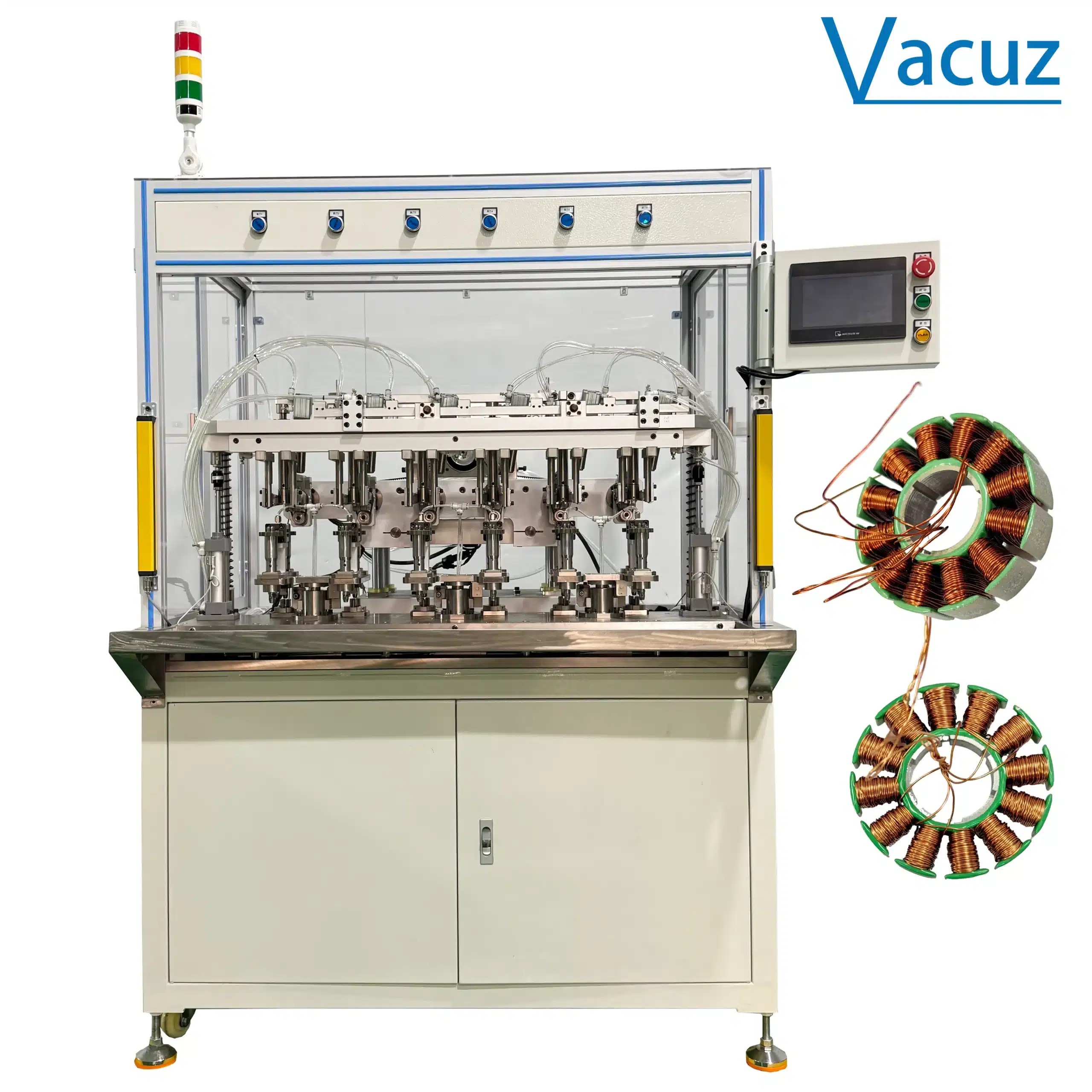
The speed of a motor stator winding machine is determined by five core factors: equipment configuration, stator parameters, wire characteristics, process requirements, and environmental conditions. Reasonable speed control requires a combination of parameter matching, dynamic adjustment, intelligent algorithms, and environmental management. Below, Vacuz will give you a brief introduction!
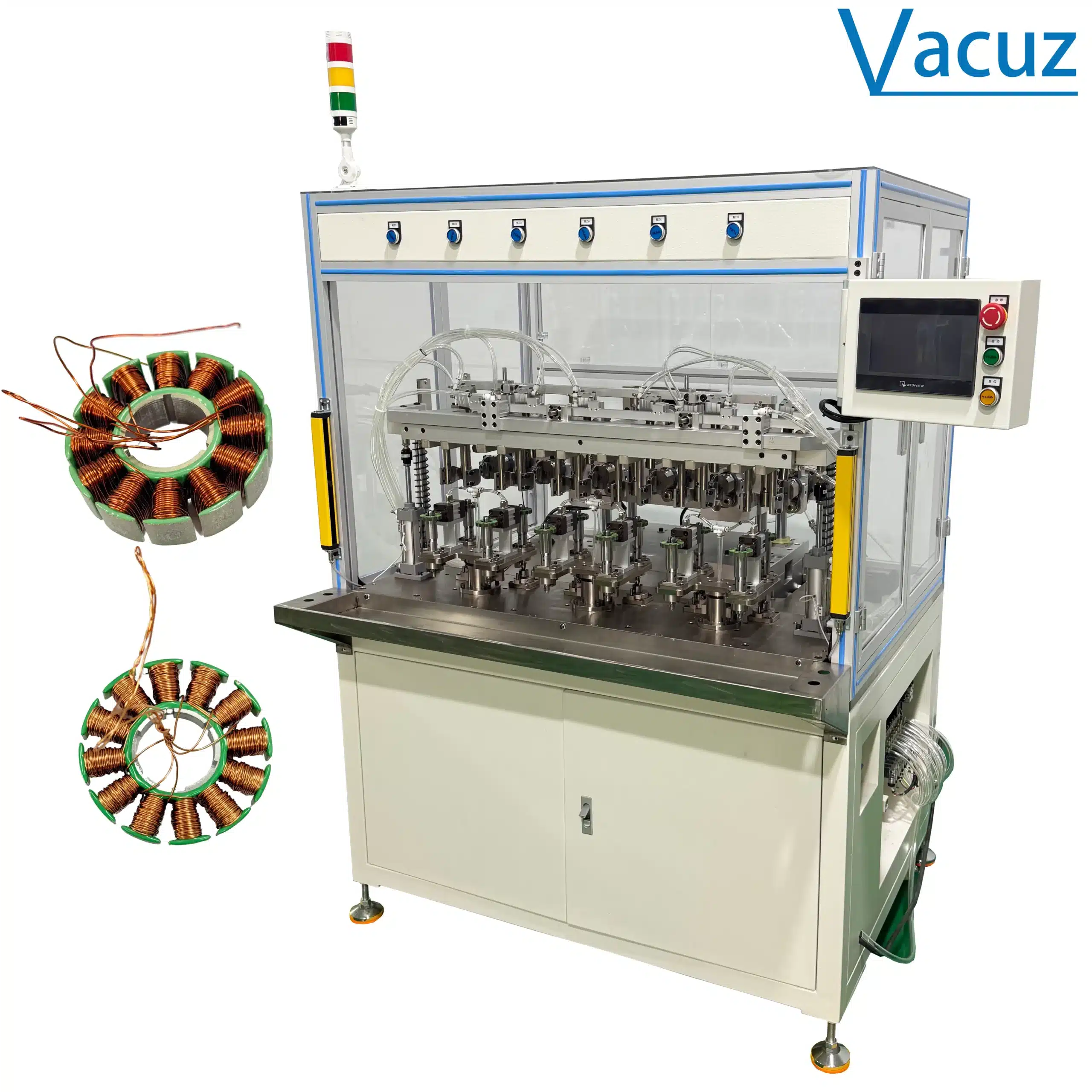
I. Core Factors Affecting Winding Machine Speed
1. Equipment Configuration
Motor Type: Servo motors offer fast response and high precision, suitable for high-speed winding; stepper motors are low-cost, but their speed and precision are limited.
Transmission System: Direct drive technology eliminates mechanical transmission errors, allowing speeds exceeding 5000 RPM; pulley or gear drives require regular maintenance and have poor speed stability.
Core Components: The durability of components such as high-precision ball screws, linear guides, and cylinders directly affects stability during high-speed operation.
2. Stator Parameters
Outer Diameter and Inner Diameter: The stator size determines the winding machine model; out-of-specification machines require custom-made equipment.
Stack Thickness (Height): When the stack thickness exceeds 200mm, the winding span increases, requiring a frequency reduction (speed reduced by 25%) to minimize wire sway.
Slot Spacing: Small slot spacing easily scratches the wire; speed must be reduced to ensure safety.
Slot Number and Shape: Complex slot shapes (such as slanted slots) require optimized wiring paths, potentially limiting speed.
3. Wire Characteristics
Wire Diameter: Fine wire (0.08-0.3mm) supports high-speed mode (≥3500 rpm); thick wire (0.8-1.3mm) requires low speed (500-1000 rpm).
Material: Aluminum wire is softer; tension needs to be 20%-30% lower than copper wire, otherwise breakage is likely.
Multi-Wire Winding: When winding 30 fine wires simultaneously, the speed needs to be gradually adjusted to a reasonable level to avoid uncontrolled tension.
4. Process Requirements
Number of Coil Turns: A higher number of turns and thinner wire diameter require a faster winding speed; however, excessive turns may increase the risk of wire breakage.
Wire Laying Accuracy: The wire laying spacing tolerance must be controlled within ±0.03mm. At high speeds, an S-shaped acceleration/deceleration curve is needed to reduce mechanical impact.
Winding Method: Internal winding (needle bar up-and-down movement) and external winding (fly fork rotation) have different speed requirements; external winding typically requires a higher speed.
5. Environmental Conditions
Temperature and Humidity: The workshop temperature must be maintained at 20±2℃, and the humidity at 50±5% to prevent electronic component failure or softening of the enameled wire insulation.
Vibration and Cleaning: The equipment must be fixed on a vibration-damping platform. Regular cleaning and lubrication are necessary to reduce the impact of wear on speed.
II. Methods for Rationally Controlling the Winding Machine Speed
1. Parameter Matching and Dynamic Adjustment
Establish a process database: This database should include stator model, wire specifications, and winding parameters, supporting rapid matching and optimization of speed combinations.
Segmented Speed Control: Speed is reduced at the beginning and end of winding, and increased in the middle stages, balancing efficiency and accuracy.
Tension Closed-Loop Control: Real-time data feedback from tension sensors automatically adjusts the tension curve to ensure wire stability at high speeds.
2. Intelligent Algorithm Optimization
S-Shaped Acceleration/Deceleration Curve: Reduces mechanical impact and improves high-speed stability.
Speed Forward Control: Decelerates in advance at path corners to prevent wire slippage or overlap.
Thermal Error Compensation: Monitors temperature distribution using an infrared thermal imager, corrects position commands in real time, and compensates for thermal deformation.
3. Equipment Upgrade and Maintenance
Upgraded Core Components: Utilizes high-power-density servo motors, carbon fiber wire guides, etc., to improve equipment performance.
Regular Mold Calibration: Ensures positioning accuracy and wire alignment, reducing errors during high-speed operation.
Cleaning and Lubrication: Regularly cleans dust from equipment surfaces and adds lubricating oil to extend equipment lifespan.
4. Environmental Management and Operation Training
Constant Temperature and Humidity Workshop: Controls temperature and humidity to prevent softening of the enameled wire insulation.
Vibration damping measures: Secure the equipment to a vibration damping platform to reduce the impact of vibration on winding accuracy.
Operator training: Master the high-risk operation of high-speed equipment (such as emergency shutdown and troubleshooting) to ensure both safety and efficiency.
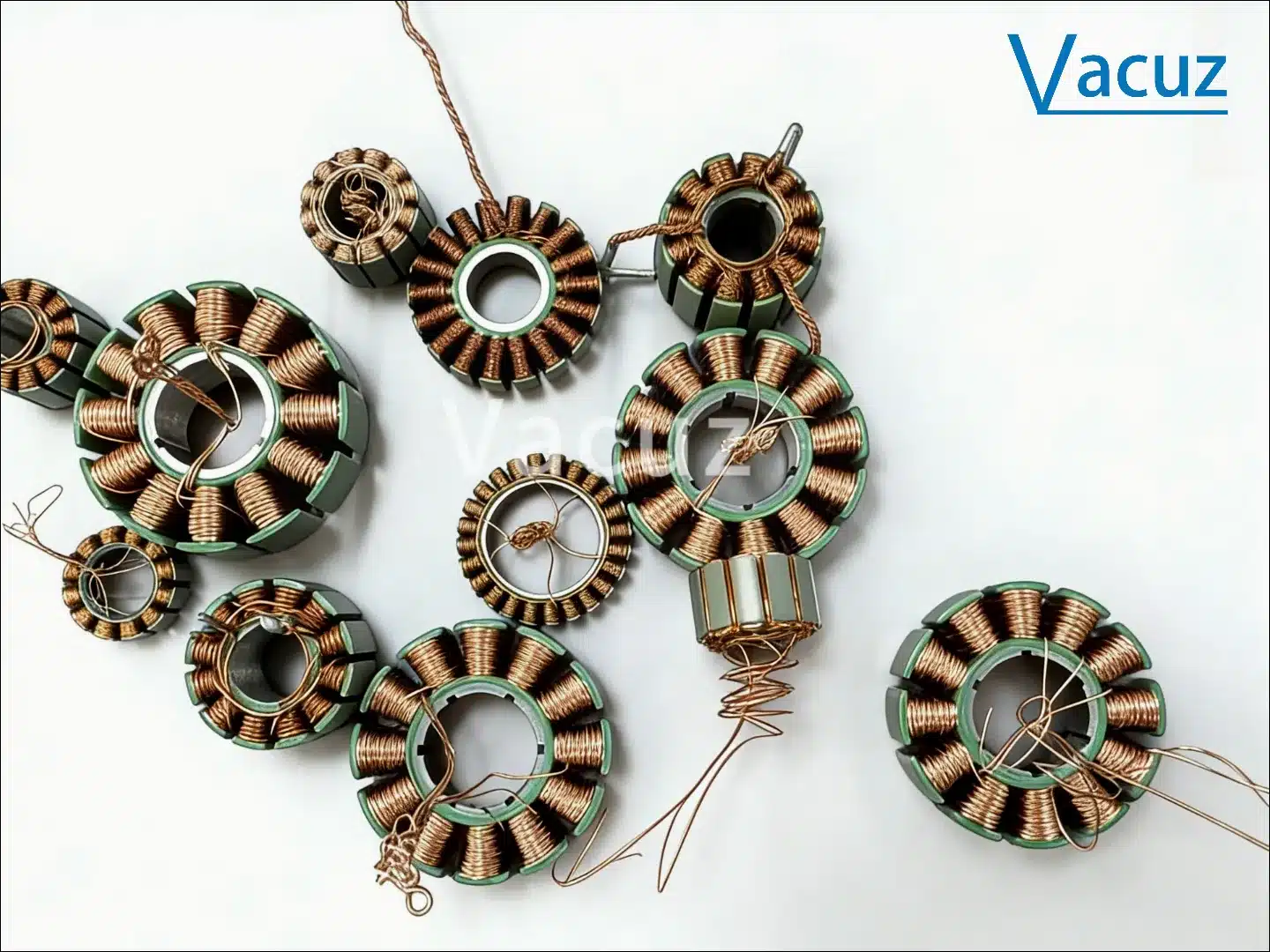
What factors determine the speed of a motor stator winding machine? How to reasonably control the speed? Vacuz has provided a simple explanation above, and we hope this information is helpful!
 English
  Spanish
  Portuguese
  Italian
  German
  French
  Russian
  Turkish
  Polish
  Ukrainian
  Japanese
  Korean
  Chinese (Taiwan)
  Chinese (China)