















When selecting a stator winding machine, besides considering the overall configuration and quality of the product, we also need to consider the production volume requirements to ensure production can be met. So how do we choose a stator winding machine based on production volume requirements? What factors determine the winding speed? Below, Vacuz will give you a brief introduction!
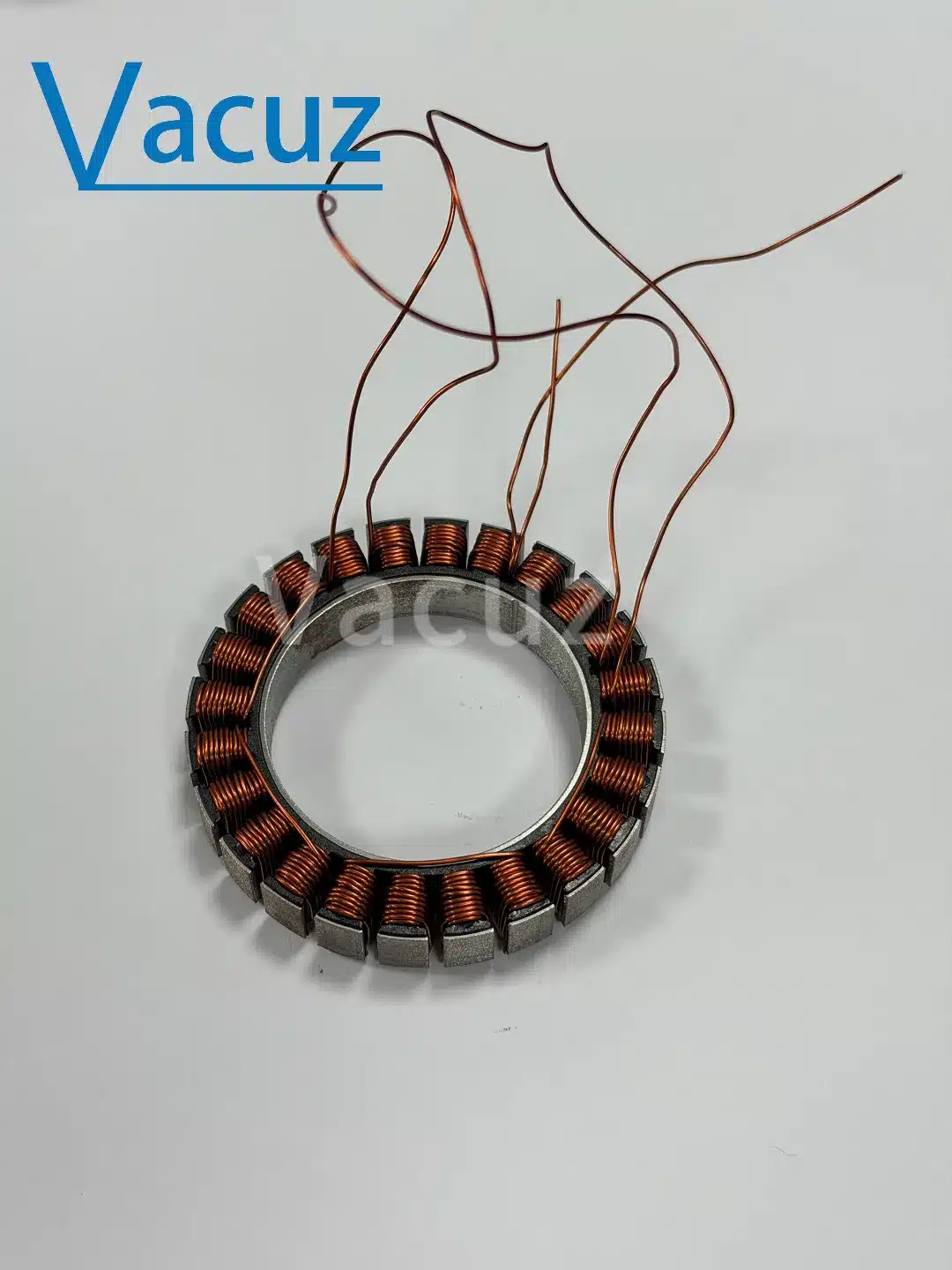
Selecting a stator winding machine requires comprehensive consideration of production targets, winding process complexity, equipment efficiency, automation level, and cost budget. Here are the specific steps and key parameters:
1. Clarify Production Volume Requirements and Production Cycle
Calculate the daily capacity of a single machine:
Based on the winding speed (revolutions/minute), winding time (time per slot), and equipment utilization rate (usually 80%-90%), estimate the daily output of a single machine.
Match the production volume target:
Small batch production (<1000 pieces/day): Choose a single-station or double-station semi-automatic winding machine; it is low-cost and flexible in changing models.
Medium-volume production (1000-5000 pieces/day): Utilize a four-station fully automatic winding machine, increasing efficiency by 300% and supporting multi-wire parallel winding.
High-volume production (>5000 pieces/day): Employ multi-axis linkage winding machines (e.g., 6-axis, 8-axis) or integrated production line solutions, coupled with an automatic loading and unloading system, to achieve 24-hour continuous production.
2. Assess the complexity of the winding process
Slot type and wire diameter:
Simple slot types (e.g., round slots): Ordinary winding machines are sufficient.
Complex slot types (e.g., V-shaped, U-shaped, oblique slots): Require a winding machine with three-dimensional motion control, supporting special processes such as oblique winding and skipping slots.
Fine wire (≤0.1mm): Requires a high-precision tension control system (e.g., closed-loop servo tensioner) and ceramic-coated wire nozzles to prevent wire breakage.
Coarse wire (≥1.0mm): Requires enhanced die hardness (e.g., cemented carbide dies) and increased drive torque.
Number of Turns and Layers:
High number of turns (>1000 turns/slot): A slow, high-precision winding machine (e.g., 500-1000 rpm) is required to avoid wire displacement due to high-speed centrifugal force.
Multi-layer winding: A layered winding function is required, with independent tension adjustment for each layer controlled by a program to prevent wire breakage due to interlayer compression.
3. Equipment Efficiency and Automation Level
Automation Level:
Semi-automatic winding machine: Requires manual loading and unloading and shape change; suitable for multi-variety, small-batch production; efficiency approximately 200-500 pieces/day.
Fully automatic winding machine: Integrates automatic loading and unloading, visual inspection, and fault alarms; efficiency increased to 1000-3000 pieces/day.
Intelligent production line: Links multiple devices through an MES system, achieving data traceability and flexible production; efficiency can reach over 5000 pieces/day.
Changeover Time:
Rapid Changeover Design: The modular fixture system supports changeovers within 15 minutes, reducing downtime and suitable for multi-product switching production.
4. Cost and Return on Investment
Equipment Price Range:
Semi-automatic winding machine: 80,000-300,000 RMB/unit.
Fully automatic winding machine: 400,000-1,000,000 RMB/unit.
Intelligent production line: 1,300,000-5,000,000 RMB/set.
Return on Investment Calculation:
Based on a comprehensive assessment of production demand, labor costs, and yield improvement (fully automatic equipment typically achieves a yield rate ≥99.5%), the cost can usually be recovered in 1-3 years.
What factors determine winding speed?
Winding speed (revolutions per minute) is a core indicator of equipment efficiency, but higher is not always better; a balance must be struck between speed, accuracy, and stability. The following factors determine the upper limit of winding speed:
1. Wire Physical Properties
Wire Diameter and Strength:
Fine wires have low tensile strength and are prone to breakage at high speeds, requiring a speed limit of ≤800 rpm.
Coating Material:
Polyimide-coated wires are heat-resistant but brittle, requiring reduced speeds for high-speed winding; polyester-coated wires are flexible and can support higher speeds.
2. Tension Control System Accuracy
Dynamic Response Capability:
During high-speed winding, tension fluctuations must be controlled within ±0.5%, otherwise, wire breakage or loosening is likely. Servo tensioners have a response time ≤10ms, supporting high-speed winding (≥2000 rpm); magnetic powder tensioners have a response time ≥50ms, suitable only for low speeds (≤1000 rpm).
Tension Range Matching:
Wire tension must be matched to the speed. For example, 0.2mm wire requires a tension of 0.8N at 1500 rpm. If the tensioner cannot output stably, the speed must be reduced.
3. Die and Fixture Design
Die Hardness and Surface Roughness:
Carbide dies have a surface roughness ≤ Ra0.4μm, reducing wire friction and supporting high-speed winding; stainless steel dies have a surface roughness ≥ Ra1.6μm, suitable only for low speeds.
Fixture Positioning Accuracy:
Fixture repeatability must be ≤ ±0.02mm; otherwise, the wire is prone to shifting during high-speed winding, leading to short circuits or wire breakage.
4. Drive System Performance
Motor Torque and Speed Fluctuation:
The servo motor peak torque must be ≥ the maximum wire tension × winding radius. Speed fluctuation must be ≤ ±0.1%; otherwise, wire breakage is likely.
Transmission Mechanism Rigidity:
Synchronous belt drives lack sufficient rigidity and are prone to slippage during high-speed winding. Direct-drive servo motors or gear drives must be used to ensure speed stability.
5. Environmental and Process Parameters
Temperature and Humidity:
When the workshop temperature is ≥30℃, the wire coating softens, requiring a speed reduction of 10%-20%; when the relative humidity is ≥70%, static electricity increases, requiring a speed control of ≤1500 rpm.
Winding Direction and Number of Layers:
Reverse winding (e.g., from bottom to top) requires a 20% speed reduction due to wire loosening caused by gravity; for multi-layer winding, the speed of each layer needs to decrease by 5%-10% to prevent interlayer compression.
Summary
Selection Principles: Match the equipment’s automation level to production requirements, and select tension control and die precision based on wire diameter and slot complexity. The return on investment period can be determined through cost analysis.
Speed Limitations: Winding speed is determined by wire strength, tension control precision, die hardness, drive torque, and environmental conditions. A suitable speed range needs to be determined experimentally to avoid blindly pursuing high speeds that could lead to wire breakage or decreased yield.
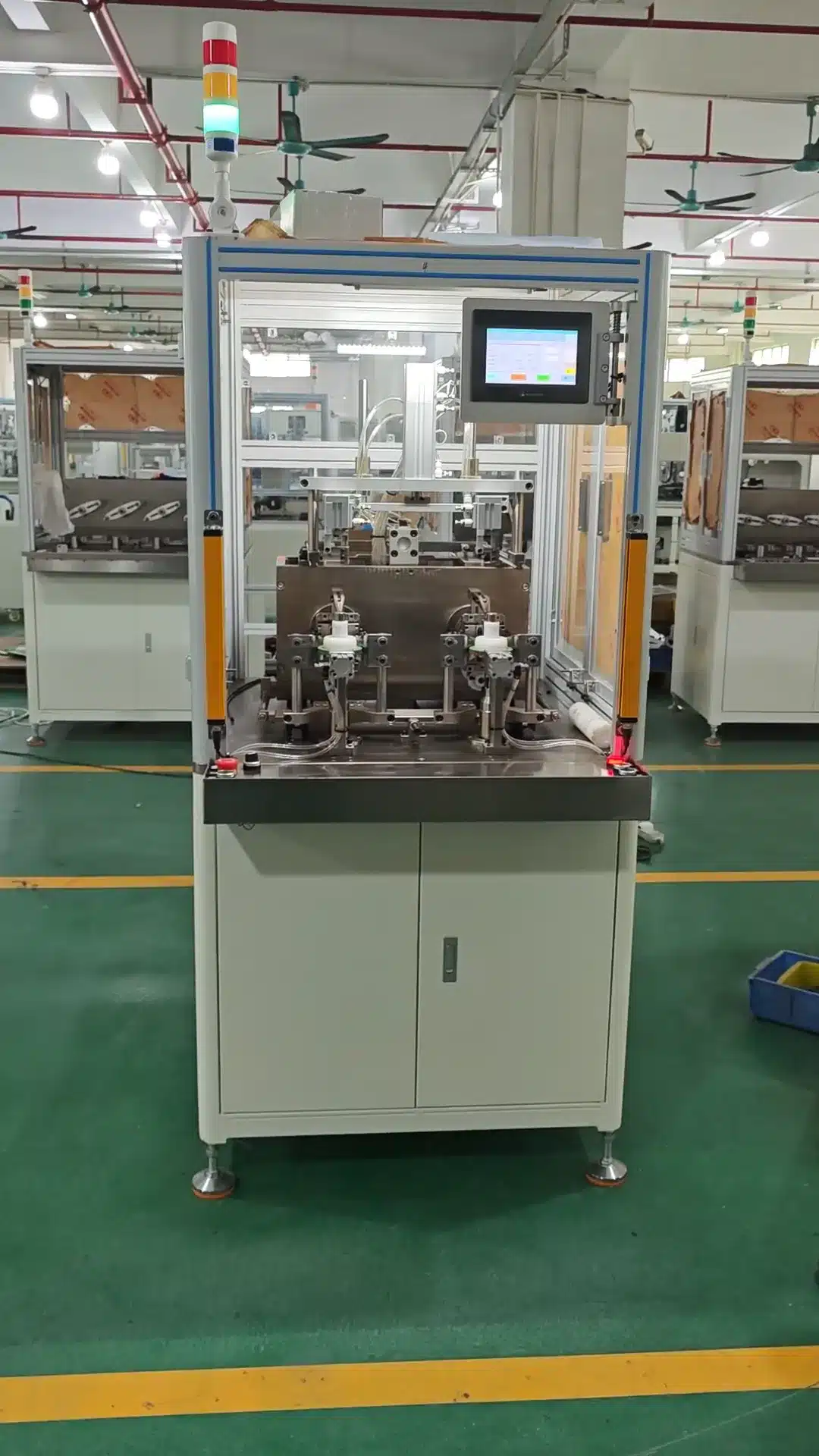
How to select stator winding machine equipment based on production requirements? What factors should not determine winding speed? The above provides a simple explanation of Vacuz, and I hope this information will be helpful!
 English
  Spanish
  Portuguese
  Italian
  German
  French
  Russian
  Turkish
  Polish
  Ukrainian
  Japanese
  Korean
  Chinese (Taiwan)
  Chinese (China)